custom web designs, web design examples, conversion-focused websites, Australian web design, service business websites
7 Custom Web Designs Worth Studying in 2026
by raffiné studio

A good-looking website isn't the same as a good lead engine. Visual polish can create a strong first impression, but it doesn't answer the commercial questions that matter to a law firm, buyers agency, broker or professional services business. Can the right visitor understand the offer quickly? Can they find proof that reduces risk? Is the next step obvious? Does the enquiry reach the right person, and does follow-up happen before intent disappears?
The seven custom web designs below are worth studying because they reveal different approaches to those problems. Some prioritise conversion research, some complex platforms, some brand and user experience, and others search visibility. The useful comparison isn't which homepage looks best. It's what business problem each site addresses, how its structure guides action, what evidence is publicly documented, and which methods an Australian service business could adapt.
Raffine Studio's perspective is straightforward: a website should connect traffic, positioning, conversion, follow-up and measurable pipeline outcomes. Design is the visible layer of that system, not the system itself.
1. Raffine Studio
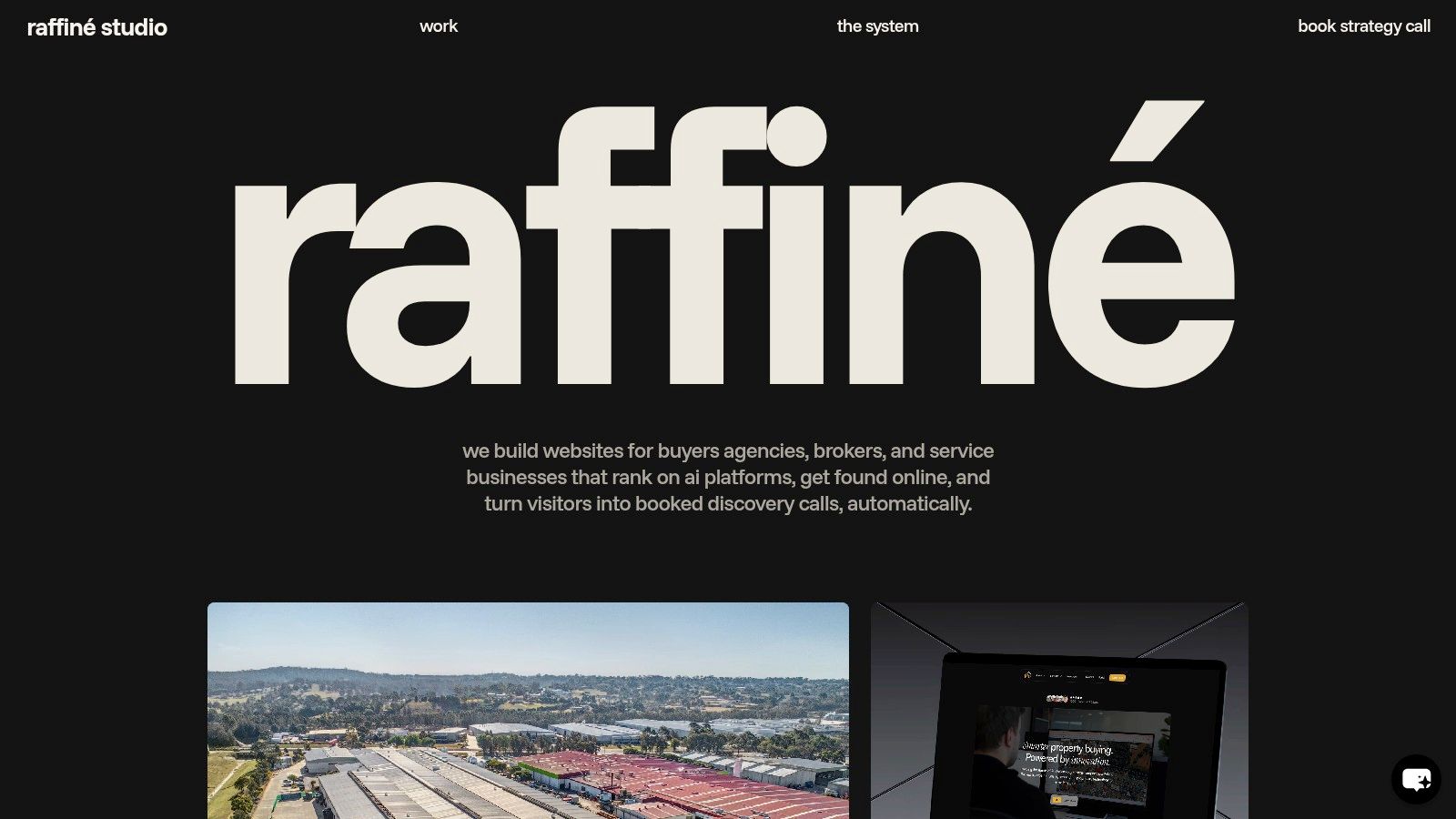
Raffine Studio treats a website as part of an acquisition and follow-up system. Its stated focus is the gap between traffic and commercial action, such as qualified enquiries or booked calls. For service firms, that gap usually reflects unclear positioning, weak proof, a poorly structured journey or an enquiry process that ends in an unmanaged inbox.
The studio works with buyers agencies, mortgage and finance brokers, law firms, accountants, consultants and other appointment-driven businesses. These firms sell expertise and trust, so the site must help a visitor understand the offer, assess relevance and decide whether a conversation is worthwhile. That makes information architecture a commercial decision. Pages, calls to action and supporting content should reflect the questions a prospect asks before contacting the firm.
Raffine's published approach can connect conversion-focused redesign, landing pages, funnel journeys, SEO, AI-search visibility, booking workflows, CRM handoffs and performance reporting. The useful point is the relationship between these components. A social post should lead to a relevant page, that page should support a defined decision, and the resulting enquiry should enter a follow-up process that the business can monitor.
The business system behind the design
Raffine publishes material on Generative Engine Optimisation and AI search, while its public positioning refers to booked discovery calls, qualified leads, conversion rates and pipeline volume. Those priorities change the design brief. A client must define its audience, offer, evidence, high-intent journey and post-enquiry workflow before choosing layouts or visual treatments.
Practical rule: A custom website brief should specify what happens after a visitor submits a form, not only what the page should look like.
The public site does not show standard pricing or detailed customer testimonials, so prospective clients need to discuss scope, timing and expected outcomes through a strategy conversation. The model suits Australian SMEs and marketing managers seeking an appointment-focused system. It is less relevant to product-first or ecommerce businesses, and search visibility requires continuing optimisation rather than a one-off redesign.
2. Chromatix

Chromatix presents custom web design as a conversion discipline. The Melbourne studio's emphasis on UX, interface design and content pathways makes its work relevant to service businesses that need more than a polished digital brochure.
The commercial strength of this approach is its focus on visitor behaviour. A page can look credible and still fail if it buries the offer, asks for too much information too early or sends every audience to the same generic contact page. Conversion-led design starts with those points of friction and makes the journey more deliberate.
Chromatix works across custom WordPress and ecommerce experiences, which gives it a useful perspective on both lead-generation and transaction pathways. For a professional services firm, the transferable lesson isn't the ecommerce functionality itself. It's the discipline of considering what the visitor needs at each stage, from initial understanding through to action.
What service businesses can borrow
A law firm could apply this thinking by separating urgent legal enquiries from exploratory research. An accounting firm might create distinct paths for business advisory, tax and audit rather than forcing every prospect through one contact form. A buyers agency could align suburb, property type and buyer stage with relevant calls to action.
The studio also communicates an ongoing measure, refine and improve mindset. That's more commercially credible than treating launch day as the finish line. A new site should create a baseline for enquiries, form completion, booking behaviour and page-level drop-off, then give the team a way to improve the journey.
The main limitation is commercial rather than technical. Public price cards aren't provided, so organisations need a scoped proposal. Boutique capacity may also affect scheduling. A smaller service business should clarify who owns copy, analytics, technical maintenance and post-launch conversion work before approving the project.
Chromatix is a strong reference for businesses that want conversion principles embedded in the design process, not added as a marketing layer after development. Its example supports a simple conclusion: the most useful custom web designs make the desired action easier because the structure reflects how customers decide.
3. G Squared
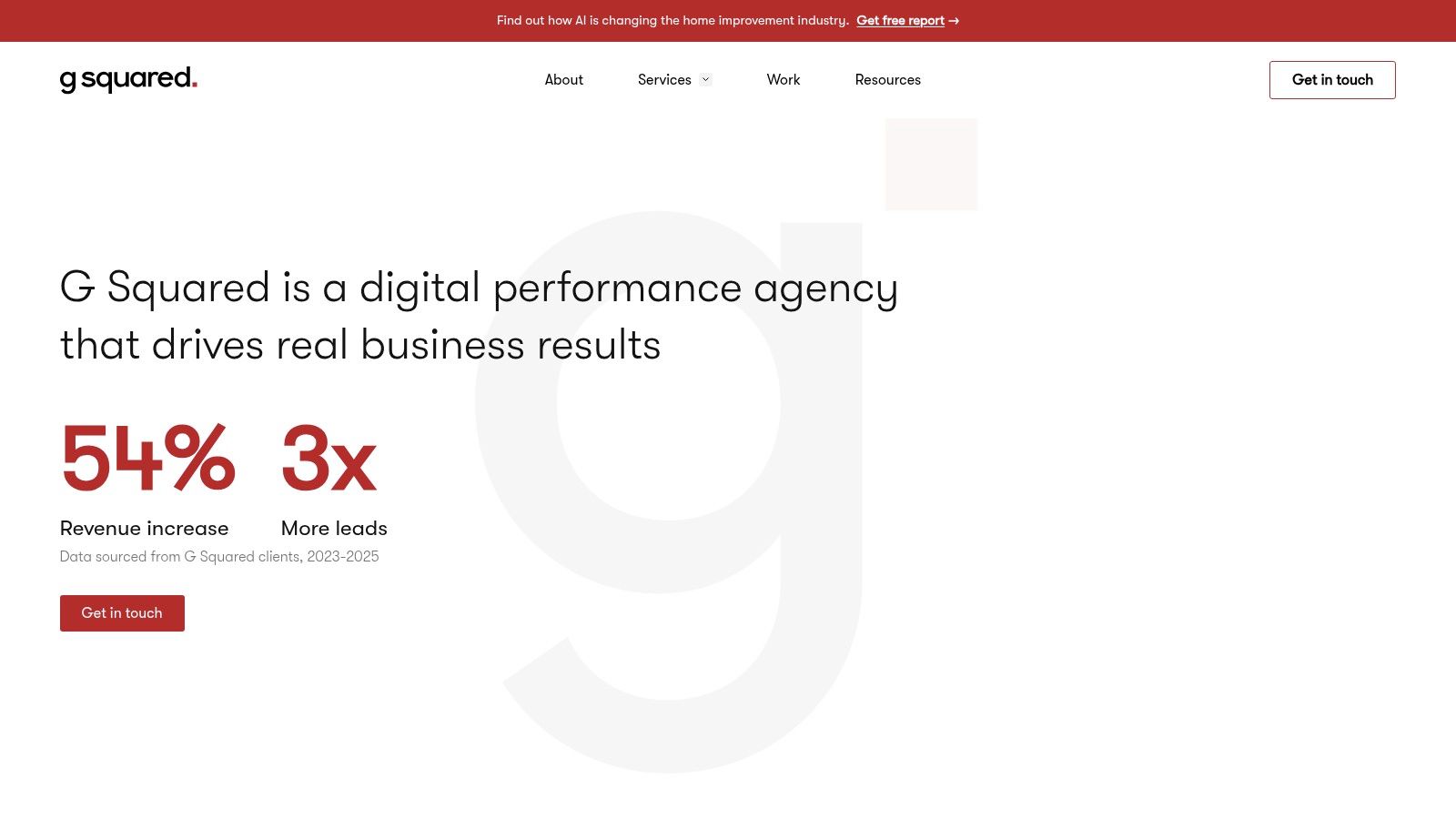
G Squared takes a performance-oriented approach from Sydney. Its positioning combines research-led UX, human-centred design, development and performance marketing, which makes the agency relevant to businesses judging a website by pipeline impact rather than visual approval alone.
The notable feature is the way its case studies frame outcomes around commercial behaviour, including bookings, conversions and revenue. Those documented claims should be assessed project by project, but their presence changes the conversation with a prospective agency. The client isn't only asking whether the design is attractive. They're asking what changed in the user journey and how the business measured it.
For a legal practice or education provider, research-driven design can expose why visitors hesitate. Perhaps the service categories don't match the language customers use. Perhaps the proof is too general to support a high-value decision. Perhaps the booking route is visible on desktop but difficult to complete on a mobile device. These are strategic problems that a visual moodboard can't diagnose.
The value of one accountable team
G Squared's combination of UX, development and marketing can reduce the gaps that appear when separate suppliers own separate stages. Designers can understand the research, developers can protect the intended interaction, and marketers can connect the finished site to acquisition activity.
That structure may suit established B2B firms with multiple stakeholders and a serious acquisition brief. It may be less comfortable for a small operator seeking a narrow build with a tightly limited budget. The agency doesn't publish pricing, so scope and engagement model need to be clarified early. Larger or more enterprise-leaning work can also involve more planning and approval effort than a founder expects.
A performance claim is only useful when the business can identify the page, audience and action responsible for the change.
The lesson from G Squared is to demand a clear relationship between research, design decisions and measurement. If a new website is expected to generate more qualified conversations, the brief should define what counts as qualified, where that action occurs and how the organisation will track it after launch.
4. Humaan
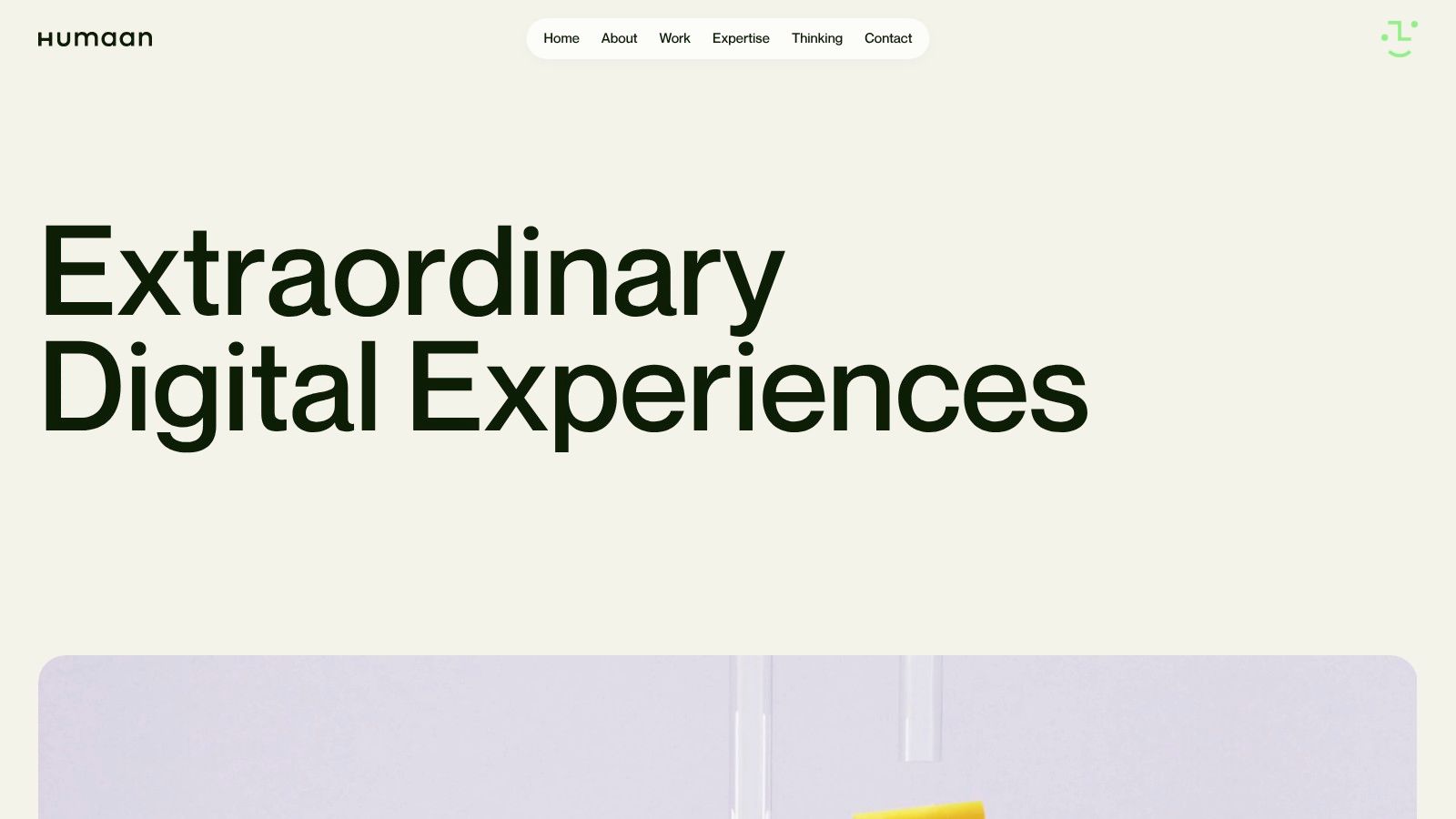
Humaan is a Perth digital agency known for high-end websites, apps and user experience work. Its portfolio-led positioning shows how custom web designs can support brand credibility while still taking usability seriously.
For a professional services firm, that balance is valuable. A law firm may need a more distinctive identity than a standard template provides, but a striking interface won't help if visitors can't find the relevant practice area or understand the firm's expertise. Humaan's strength lies in treating craft and usability as connected disciplines.
The agency's award recognition, sector breadth and work for notable Australian brands and institutions provide visible signals of capability. Those signals don't automatically prove that a particular website will generate enquiries. They do show how a business can use design quality to communicate seriousness, especially where prospective clients assess reputation before making contact.
Where premium design earns its place
Complex organisations often have competing audiences, layered content and demanding brand requirements. A custom experience can help prioritise those audiences rather than forcing every visitor into the same navigation model. It can also create a more coherent relationship between brand language, content hierarchy and interaction design.
That's especially relevant to firms whose buyers compare several providers before booking. The website has to answer practical questions while also making the organisation feel credible, considered and appropriate for the work.
Readers assessing agencies should distinguish between design excellence and commercial suitability. A premium studio may be the right choice when the brand, experience and complexity justify it. It may be excessive for a straightforward local service site that mainly needs clearer messaging, stronger proof and a more direct booking path.
Businesses seeking a more focused approach can also review web design for professional services before commissioning a project. The central question is not whether an agency can create a beautiful interface. It's whether the interface makes the firm easier to trust and easier to contact.
5. Luminary
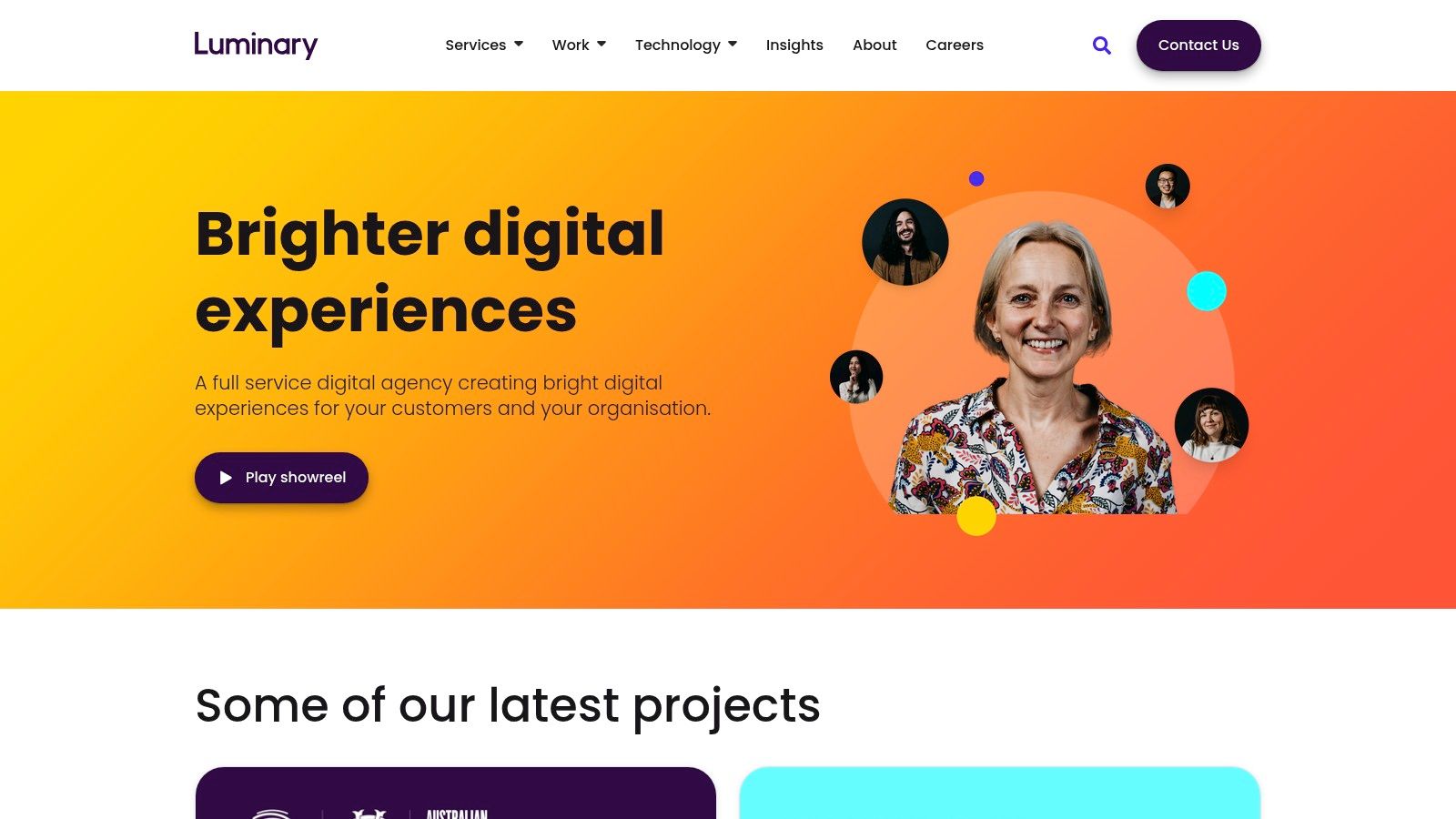
Luminary represents the platform and governance side of custom web design. Established in 1999, the Australian independent agency works across discovery, UX, development, SEO, analytics and ongoing support. Its capabilities include enterprise content management and digital experience platforms such as Kentico and Kontent.ai.
The commercial question is whether the website must operate as a managed digital system, rather than a marketing surface. Government bodies, large organisations and businesses with multiple stakeholders may require permissions, structured publishing, integrations, accessibility processes and governance. These requirements affect operational risk, publishing speed and the consistency of customer journeys, not just front-end appearance.
Luminary's recognition across Australian Web Awards, W3 and design awards offers public evidence of industry acknowledgement. Its enterprise delivery record and CMS expertise are relevant to organisations with substantial content operations, multiple internal teams or complex approval workflows.
Choose the operating model, not only the interface
A mid-market business should test whether it needs a digital experience platform. The decision depends on content ownership, approval processes, integration requirements, audience breadth and the organisation's capacity to maintain governance. An advanced system can increase cost and internal workload if the underlying problem is weak positioning or an unclear enquiry path.
A large organisation faces the opposite risk. A simple build may fail to support publishing and integration requirements, creating later rework across content, search visibility, internal workflows and stakeholder confidence.
The relationship between branding and web design needs to be considered together, but not confused. Brand establishes the organisation's identity and promise. The platform determines how that promise is managed, presented and maintained across a larger digital environment. Information architecture, trust content and conversion paths still need to guide users towards an enquiry, application or other defined outcome.
Luminary is best studied by organisations that need scale, structure and governance. Its example gives smaller service firms a useful warning: enterprise capability should follow publishing and operational requirements, not prestige. For larger organisations, platform selection should be assessed as a business-system decision, with design, search, measurement and ongoing ownership considered together.
6. Wolf IQ
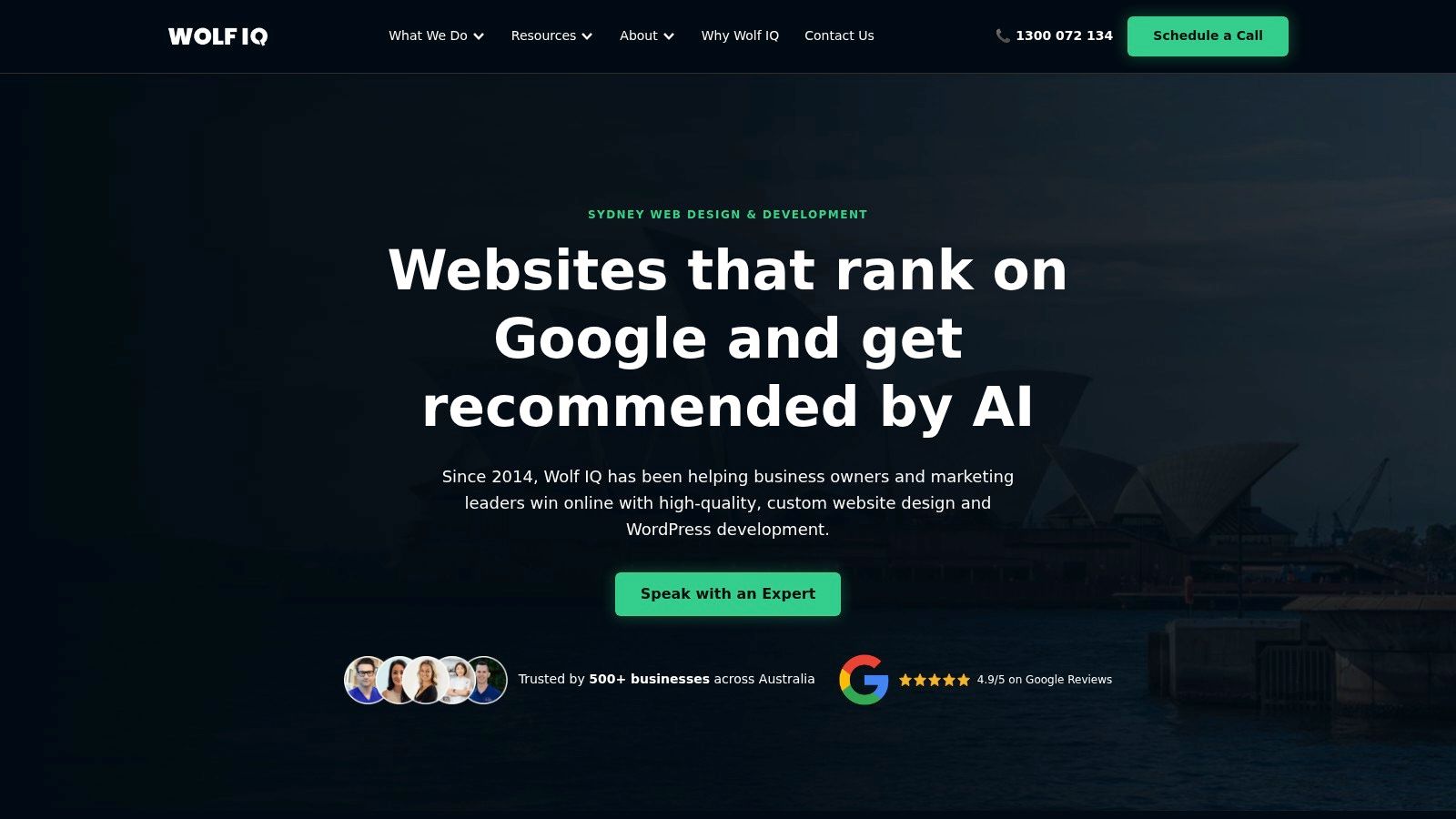
Wolf IQ focuses on custom WordPress development with search and conversion foundations built into the process. Its public positioning connects strategy, custom UX, technical quality assurance, launch and measurement, while also addressing visibility in AI-mediated search.
That combination is increasingly relevant to Australian service businesses. Search discovery no longer ends with a traditional results page. Australian reporting in late 2025 stated that over one-third of Google searches in Australia were producing AI summaries, while reported click-through rates for results appearing in AI Overviews fell by 15% to 70%. Those figures come from ABC News coverage of the shift in Australian search, and they point to a practical design requirement: content needs to be clear enough for both people and machine-mediated answers to interpret.
Wolf IQ's emphasis on SEO, answer-oriented structure and schema gives service businesses a useful reference. A mortgage broker needs pages that explain lending scenarios plainly. A healthcare provider needs service information, trust signals and local context. A B2B firm needs expertise pages that answer specific buying questions rather than relying on broad claims.
Why WordPress fit still needs testing
WordPress can be an effective foundation for businesses that need editorial control, flexible landing pages and a familiar content workflow. It isn't automatically the right platform for every organisation. Teams with headless, DXP or advanced integration requirements may need another architecture or specialist partner support.
The agency's documented outcomes across enquiries, online orders, keyword growth and AI-driven discovery are useful evidence of the type of result it tracks, but prospective clients should ask which baseline, audience and conversion action each case study represents.
AI-search visibility begins with useful, well-structured answers. It doesn't replace proof, positioning or a credible reason to contact the business.
Wolf IQ is a strong fit for SMEs that want a WordPress website engineered for both search discovery and action. Its example reinforces that technical SEO and conversion design should be planned together, not handed to separate teams after launch.
7. White Peak Digital
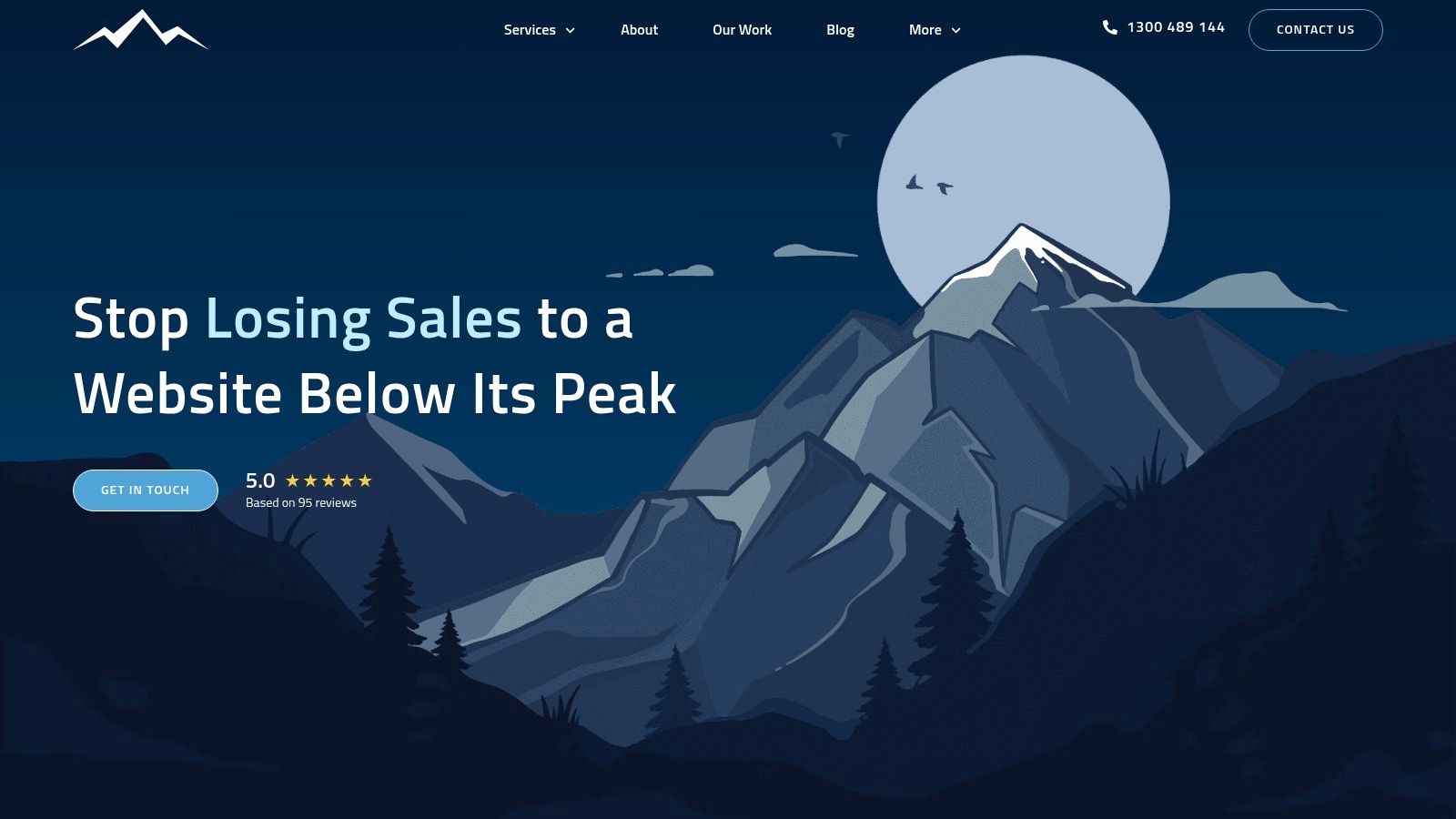
White Peak Digital positions itself as a Brisbane-based conversion-focused web design and CRO agency serving Australian service businesses and ecommerce companies, with servicing across Sydney and Melbourne. Its model combines human-centred design with data-led optimisation, which makes it a practical reference for businesses that want to improve lead or sales performance after the initial build.
The focus is commercially useful because many website projects stop at launch. A redesigned site may improve clarity, but the business still needs to understand which pages attract high-intent visitors, where people abandon forms and whether calls to action match the audience's readiness. CRO creates a process for learning from that behaviour rather than treating the first design as final.
White Peak's public customer feedback, awards and recognition support its credibility positioning. They're useful signals, but they shouldn't replace questions about delivery. A buyer should ask how research is conducted, what analytics are configured, how recommendations are prioritised and who owns testing after launch.
A sensible fit for service businesses
A construction company might need separate journeys for commercial developers, architects and residential customers. A buyers agency may need to distinguish investors from owner-occupiers. A professional services firm may need a low-friction consultation request for one audience and a longer qualification path for another.
Those journeys can be supported through custom WordPress builds, landing pages, targeted calls to action and structured content. The relevant success measure is not only more form submissions. It's whether the website attracts the right enquiries and gives the team enough information to respond effectively.
White Peak is more WordPress-centric than agencies specialising in headless or enterprise DXP platforms. Its publicly available enterprise integration case depth also appears narrower than that of larger agencies, so complex organisations should test platform fit carefully.
Businesses comparing providers can use SEO web design as a useful lens. Search visibility brings qualified visitors into the system, but conversion design determines whether those visitors can recognise relevance and act.
Custom Web Design: Top 7 Agency Comparison
Agency | Implementation complexity 🔄 | Resource requirements ⚡ | Expected outcomes 📊 | Ideal use cases 💡 | Key advantages ⭐ |
|---|---|---|---|---|---|
Raffine Studio | 🔄 High, end-to-end funnel + AI-search integration and automation | ⚡ Medium–High, specialist design, SEO/AI and automation work; ongoing optimisation | 📊 Measurable pipeline growth (booked discovery calls, qualified leads) | 💡 Appointment-driven professional services (buyers agents, brokers, law, accounting) | ⭐ Systems approach uniting site, funnels, social, SEO and CRM |
Chromatix | 🔄 Moderate, custom WordPress/eCommerce with conversion UX | ⚡ Medium, boutique team, proposal-based scoping | 📊 Improved conversion flows and qualified enquiries | 💡 Service businesses and small eCommerce needing UX-led builds | ⭐ Clear conversion-first methodology and local case experience |
G Squared | 🔄 Moderate–High, research-led UX and integrated performance marketing | ⚡ Medium–High, multidisciplinary team for strategy → delivery | 📊 Demonstrated lifts in bookings, conversions and revenue | 💡 Service firms and B2B SMEs focused on pipeline impact | ⭐ Performance-oriented with documented case metrics and awards |
Humaan | 🔄 High, bespoke UX, design and custom development | ⚡ High, premium agency resources and craft (award-level) | 📊 High-quality branded experiences and usability outcomes | 💡 Professional services requiring brand credibility and polished UX | ⭐ Strong UX pedigree and award recognition |
Luminary | 🔄 High, enterprise DXP/CMS, governance and integrations | ⚡ High, enterprise budgets, stakeholder time and long timelines | 📊 Scalable, accessible platforms with robust governance | 💡 Mid-market to enterprise, government and NFP needing headless/DXP | ⭐ Deep CMS/DXP expertise and enterprise delivery track record |
Wolf IQ | 🔄 Moderate, WordPress builds with SEO/AEO and structured process | ⚡ Medium, WordPress-focused resources; SEO/content effort ongoing | 📊 Measurable gains in traffic, enquiries and AI-driven discovery | 💡 SMEs needing SEO/AI visibility plus conversion improvements | ⭐ Strong SEO/AI visibility focus and documented outcomes |
White Peak Digital | 🔄 Moderate, CRO-led WordPress/eCommerce design and optimisation | ⚡ Medium, data-driven CRO work and multi-city support | 📊 Measurable lead and sales growth with strong review signals | 💡 Australian service businesses and eCommerce seeking CRO | ⭐ Conversion optimisation focus and visible customer reviews |
Turn Design Inspiration Into a Better Commercial Brief
The seven examples point to a conclusion that visual portfolios rarely make obvious. Custom web design is a business-system decision. The right supplier depends on whether your primary constraint is positioning, user experience, content governance, search visibility, conversion friction, platform complexity or follow-up.
Start by defining the commercial objective in plain language. A buyers agency may want more qualified appraisal conversations. A broker may need booked discovery calls from specific lending segments. A law firm may want practice-area enquiries from clients with a clear problem. A B2B business may need to turn expertise content into a structured sales conversation. Without that definition, “better website” becomes an aesthetic preference.
Then map the high-intent journeys. Identify what each audience is trying to understand, what evidence they need and what action makes sense at that point. A visitor who has just discovered a service may need education and proof. A visitor searching for a specific provider may need credentials, relevant case evidence and a fast booking route. Sending both visitors to the same generic contact page creates avoidable friction.
Your brief should also specify:
Positioning: What does the business do, for whom, and why should that audience choose it?
Information architecture: Which service, industry, location or problem pages deserve their own journey?
Trust: What credentials, process detail, reviews, outcomes or supporting evidence can the business publish?
Search structure: How will service pages, FAQs, internal links, metadata and machine-readable content support Google and AI search?
Conversion action: Should the visitor book a call, submit an enquiry, request an assessment or start a qualification process?
Follow-up: Where will the lead go, who owns the response and what happens if the visitor doesn't book immediately?
Measurement: Which events distinguish traffic from qualified pipeline, and how will the team review them after launch?
Australian benchmarks show why this discipline matters. One Australian digital marketing source places average conversion for Australian service businesses at 2.3%, with top-performing sites reaching 5% to 10%. That benchmark shouldn't be treated as a promise. It's a reminder that small improvements to clarity, trust and action pathways can have commercial consequences when the business already receives relevant traffic.
Other Australian guidance places competitive lead-generation performance at 2% to 5% of sessions ending in an enquiry, while ecommerce is typically 1% to 3% of sessions ending in a purchase. The benchmark source also reinforces the need to compare like with like. A service website, a targeted landing page and an ecommerce store have different visitor intent and should not share one simplistic target.
The current search environment adds another requirement. Australian AI-search guidance recommends structured data such as FAQPage, LocalBusiness or ProfessionalService, Service and Review schema, alongside exact consistency for the business name, address and phone number across the website, Google Business Profile and directories. The Australian AI-search guidance gives businesses a practical foundation for making their expertise easier for search systems to interpret.
Finally, inspect the current website as a revenue path. Are qualified visitors landing on pages that reflect their intent? Do they see relevant proof before the enquiry request? Can they book without waiting for a manual reply? Does the CRM capture source and service interest? If the answer is unclear, the problem may not be the lack of another visual refresh. It may be a disconnected system between website, search, conversion and follow-up.
Raffine Studio works on that system through conversion-focused website design, funnel architecture, SEO, AI-search visibility, automated booking and CRM handoffs. The most useful next step is to review where your current site loses qualified visitors, then turn those gaps into a brief that a designer, developer and commercial team can all measure.
Raffine Studio builds conversion-focused websites, landing-page funnels and automated booking systems for Australian buyers agencies, brokers and professional services firms. If your custom web design needs to connect search visibility with qualified enquiries and follow-up, visit Raffine Studio to review the gaps affecting your pipeline.