web design agency Sydney, Sydney web design, website redesign, conversion-focused websites, SEO agencies Sydney
7 Web Design Agency Sydney Options for 2026
by raffiné studio

The best web design agency Sydney depends on the commercial problem you need solved, not the prettiest portfolio. Australia has 2,814,778 actively trading businesses, including 996,203 employing businesses, so a website that attracts qualified enquiries, books calls and follows up quickly can serve a substantial market, not just improve appearances.
The popular advice is to compare visual style first. That's the wrong starting point for most Australian service businesses. A law firm, buyers agency, broker or B2B consultancy needs clear positioning, qualified traffic, an obvious next step, CRM handoff and measurable pipeline outcomes. A complex organisation may instead need enterprise governance, integrations, multi-site architecture or research-heavy product design.
This list compares seven Sydney options by the business problem each is best placed to solve. It covers ideal client fit, core services, technical depth, conversion capability, delivery model, likely budget implications and suitability for turning a website visit into a qualified discovery call. The supplied agencies don't publish comparable pricing, so this article compares their pricing approach and likely scope implications without inventing price ranges.
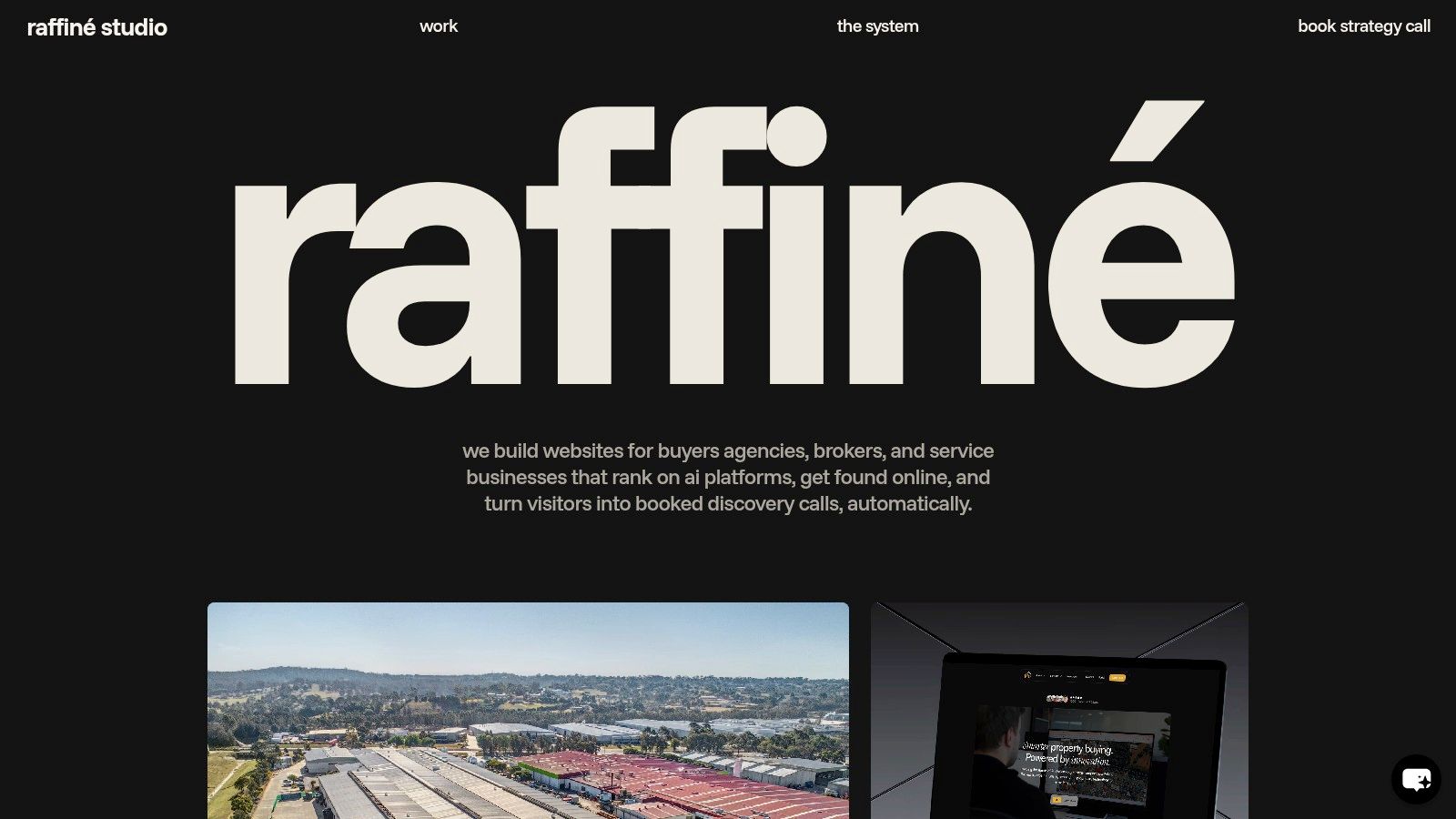
1. Raffine Studio for service-business lead generation
Raffine Studio is the strongest fit for buyers agencies, mortgage and finance brokers, professional services firms and B2B service businesses that need more than a polished brochure site. Its focus is a connected growth system, website, SEO, AI search visibility, content, funnels, booking, CRM handoff and follow-up.
That focus matters because Australian service-business websites average a 2.3% conversion rate, compared with an Australian ecommerce benchmark of about 1.78%, according to Australian digital marketing benchmarks. For a service firm, the commercial question is whether the site creates a qualified enquiry or booked call, not whether it merely attracts visits.
Raffine's work is built around that path. The studio can clarify messaging, structure service pages around buyer intent, create multi-step funnels, connect social content to on-site actions, implement SEO and Generative Engine Optimisation, and automate booking and CRM follow-up. It also uses analytics and KPI reporting to help teams distinguish traffic from qualified pipeline.
Why Raffine suits discovery-call businesses
The strongest advantage is specialisation. Buyers' agents, brokers and professional services firms often sell through trust, expertise and a conversation, so their websites need to answer objections before a prospect commits to a call. Raffine's approach makes the discovery journey part of the website architecture rather than an afterthought.
The studio also addresses a newer acquisition problem. 12% of Australians now use AI as their primary search tool, up from 5% in the previous 12 months, according to Australian AI adoption statistics. Answer-first content, clear entity signals, named authors, structured information and citation-aware content can therefore support visibility across Google and AI assistants such as ChatGPT, Gemini and Perplexity.
Practical rule: If your website's main commercial job is to turn interest into a booked conversation, choose the agency that owns the full journey, not just the design file.
Raffine doesn't publish standard pricing. Projects are custom scoped, which means budget clarity comes through discovery rather than a packaged menu. That's a reasonable trade-off for businesses with several services, complex messaging or automation requirements, but less suitable for a large ecommerce storefront or a heavily transactional product platform.
The studio highlights case-led work including Centuria, Douglas Aerospace and buyers-agent funnels, alongside thought leadership on GEO and conversion design. Its fast-shipping approach is also useful for teams that need to improve the site without waiting for a lengthy transformation programme.
2. Devotion for complex digital platforms
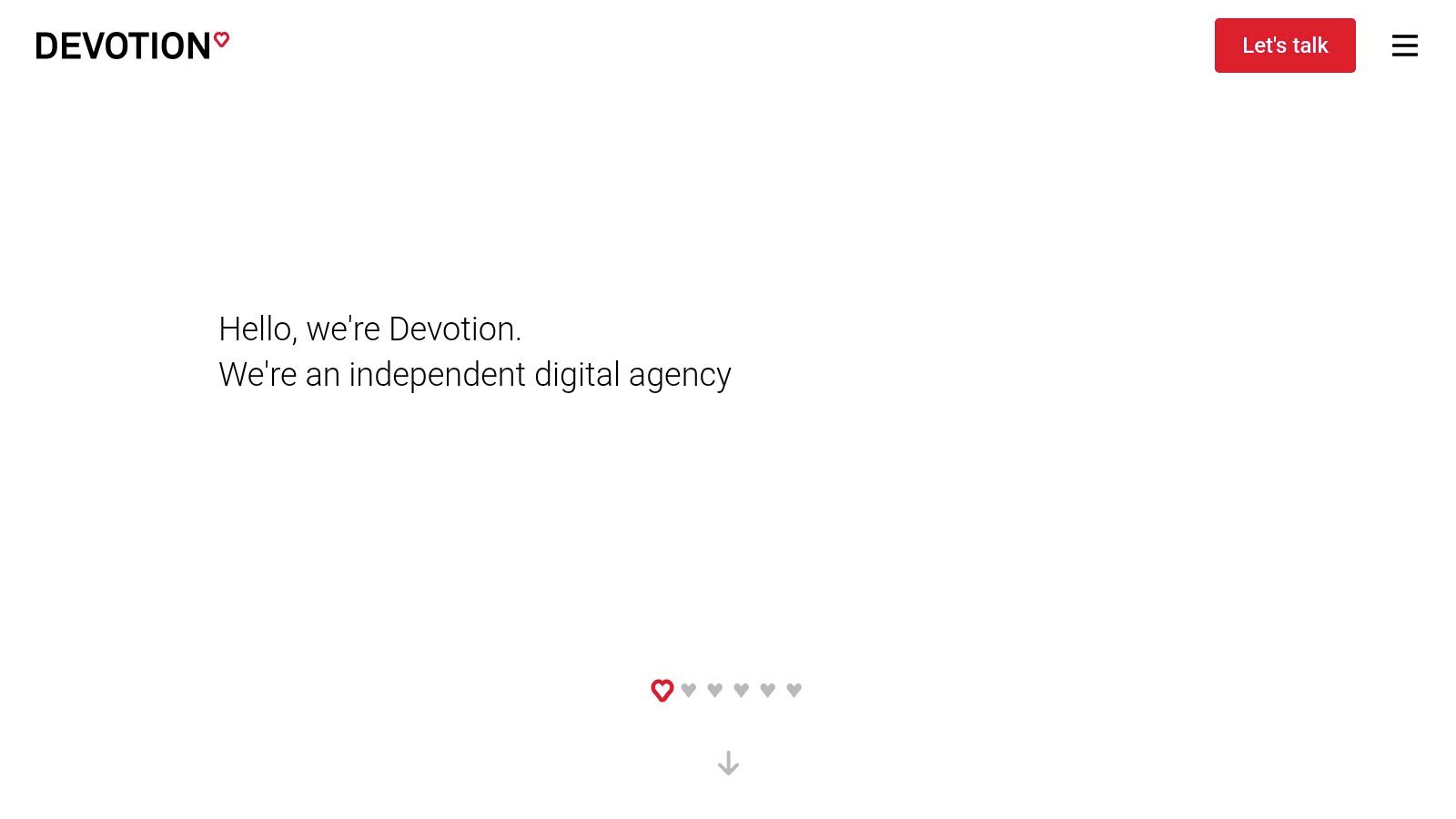
Devotion is better suited to organisations that need an integrated digital platform than a straightforward lead-generation website. Its capability spans discovery, UX and UI, development and growth, with experience across enterprise CMS options including Kentico and Umbraco.
The agency's end-to-end model is valuable when the website must connect with internal systems, complex content structures, analytics or broader digital operations. Its published delivery framework, Discover, Design, Deliver and Devote, gives larger teams a defined process for moving from requirements to ongoing optimisation.
Devotion's portfolio emphasises measurable business outcomes, including revenue and acquisition performance. That makes it a credible option when marketing, technology and executive stakeholders need more than visual approval. The key buying question is whether your organisation has enough platform complexity to justify that capability.
The trade-off for smaller service firms
Devotion's enterprise orientation can create unnecessary weight for a professional services firm that mainly needs sharper positioning, search visibility and a reliable booking path. Larger technical teams, more formal governance and complex integrations generally require more planning than a focused lead-generation build.
Its pricing isn't publicly listed. Treat the first conversation as a scoping exercise, and ask the team to separate essential platform requirements from future-state features. You should also request clear ownership for messaging, content migration, analytics, CRM integration and post-launch optimisation.
A site can be technically sound and still underperform if the service hierarchy is unclear or the primary call to action is buried. Raffine's website design and SEO perspective is useful here because it treats search structure and conversion architecture as connected decisions, not separate deliverables.
Best fit: an organisation with complex integrations, an enterprise CMS requirement or a platform project that needs a structured delivery framework.
Main limitation: a heavier process and likely larger scope than a founder-led service business needs.
3. G Squared for web, creative and performance integration
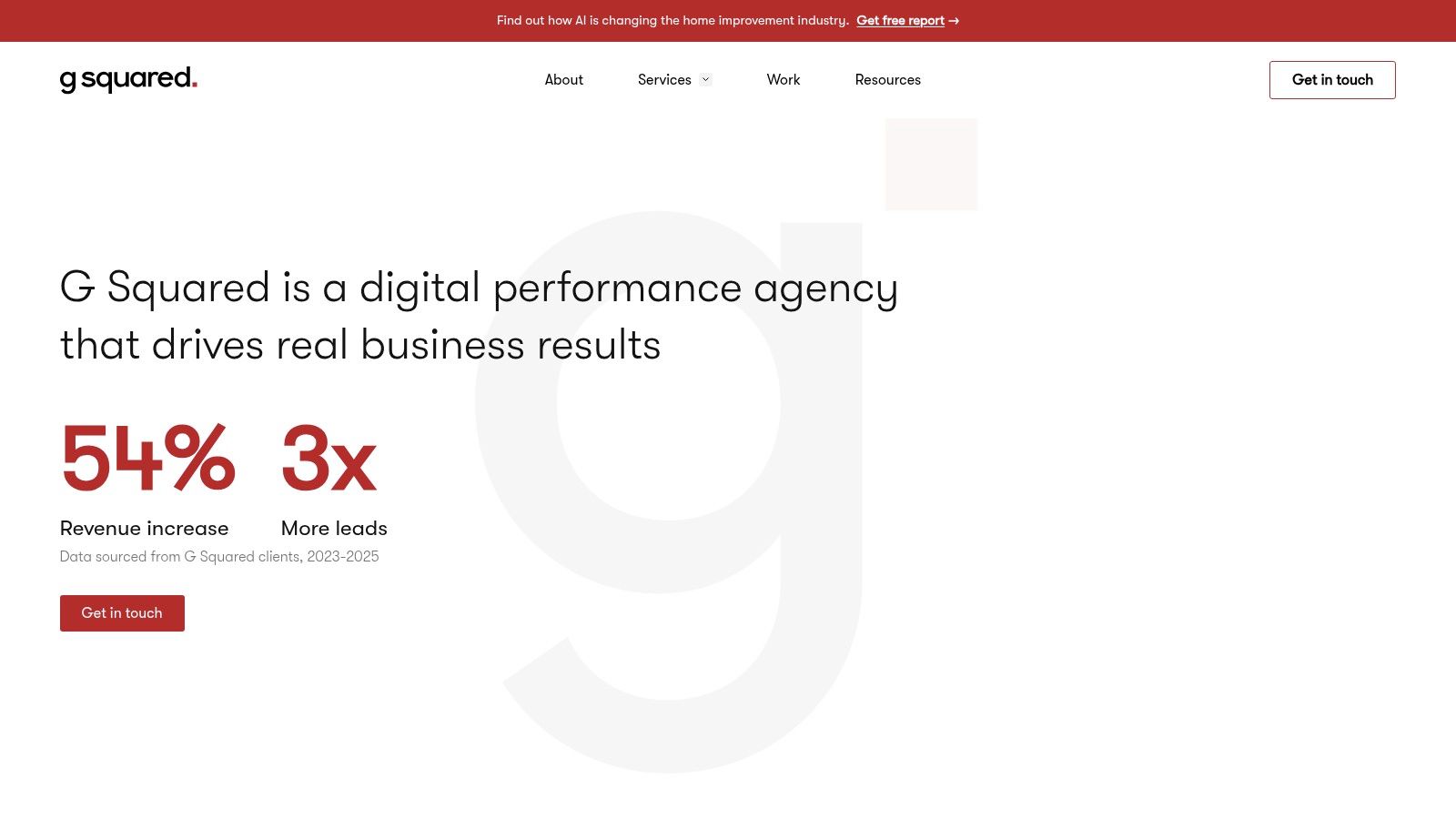
G Squared suits businesses that want website design connected closely to creative, media and performance activity. Its approach is research-driven and human-centred, with an emphasis on understanding users before deciding how the site should look or behave.
That combination is useful when the website is one part of a broader acquisition programme. A campaign may bring qualified traffic to a landing page, but the page still needs a strong proposition, credible evidence, clear next steps and a measurement plan. G Squared's integrated capability can reduce the gap between what advertising promises and what the website delivers.
When performance should shape the build
Choose G Squared when you expect the site to work alongside ongoing media or campaign activity. The agency's model is less about producing an isolated corporate website and more about tying design and creative decisions to acquisition and conversion outcomes.
The trade-off is engagement fit. A small business with a narrow service range and limited marketing activity may find a performance-led agency model broader than required. Pricing isn't publicly packaged, so ask for a proposal that distinguishes research, design, development, media and optimisation work.
You'll also want to establish who owns the messaging. Research can reveal user needs, but someone still has to turn those findings into sharp service positioning and commercially useful copy. Raffine's branding and web design guidance covers that relationship from a service-business perspective.
Best fit: a business that wants web, creative and performance activity managed as one acquisition system.
Main limitation: the model may be less suitable for a very small budget or a business that only needs a focused website refresh.
A performance-ready website should make the campaign's promise easier to understand, not force visitors to decode it.
4. 4mation for engineering-led custom delivery
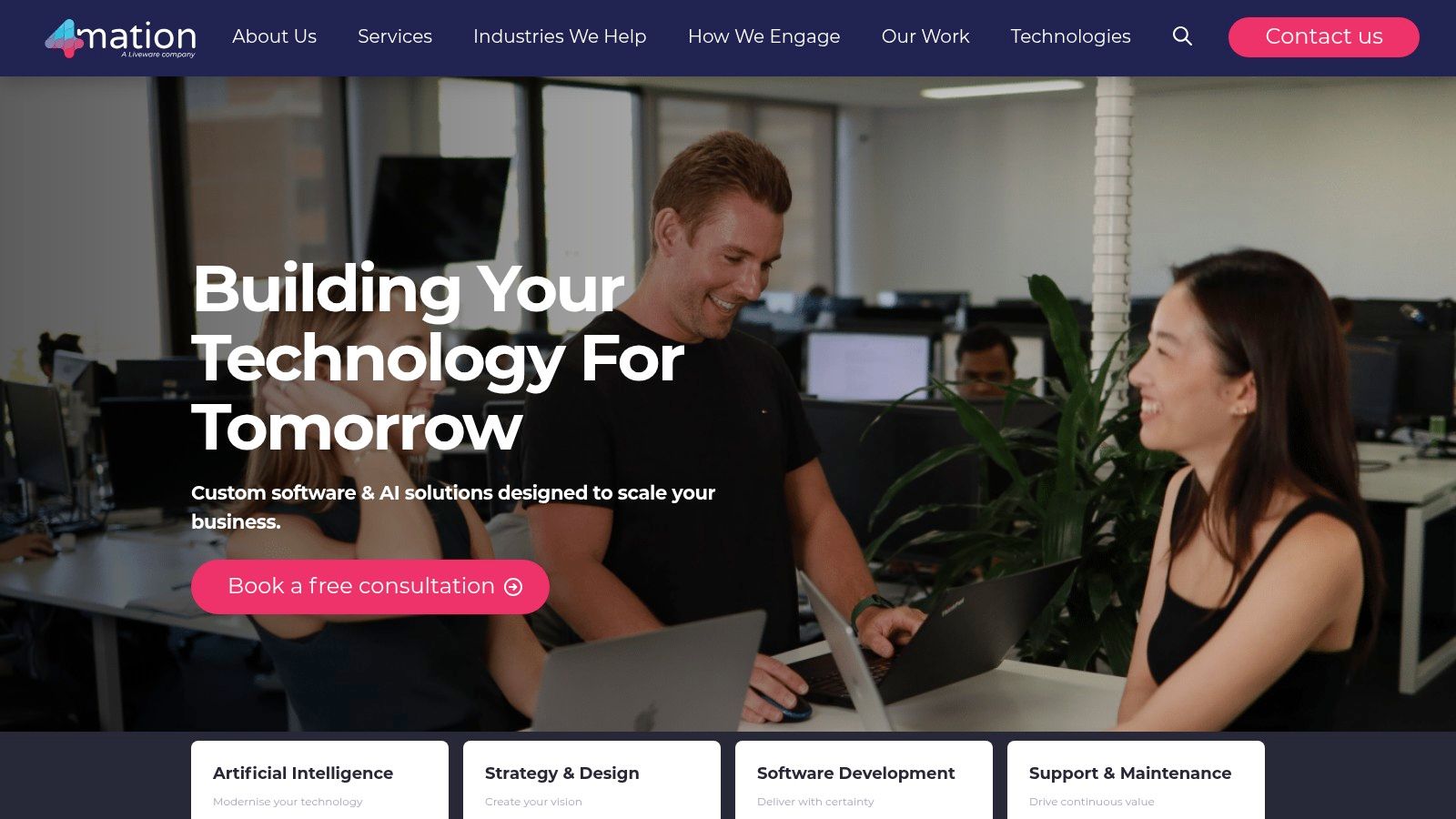
4mation is the practical choice when technical delivery, custom functionality and ongoing engineering support matter more than an agency-led brand transformation. The Sydney team presents local, in-house development capability and supports UX, UI, testing and post-launch improvement.
Its technology coverage includes .NET, JavaScript, PHP, WordPress and headless CMS options. That breadth is useful when a business has existing technology constraints, unusual integration requirements or a need to extend the website beyond standard content management.
4mation also offers different engagement models, including fixed projects, agile retainers and team augmentation. That gives technology and marketing leaders more control over how the work is delivered after launch. A business can commission a defined build, retain development capacity or add specialist support to an internal team.
Where engineering strength needs support
The commercial risk is not technical failure. It's building a capable platform without enough strategic direction in content, brand or lead qualification. If the agency is primarily solving engineering problems, your team may need to provide stronger messaging leadership or bring in a partner for SEO, content and funnel strategy.
The agency doesn't publish a standard price list, so scope should document integrations, testing, content migration, analytics, accessibility expectations and support responsibilities. Ask what happens when the project moves from delivery into optimisation.
Best fit: an organisation requiring custom development, local engineering capability or a long-term technical partner.
Main limitation: businesses seeking a complete positioning, content and demand-generation system may need additional strategic support.
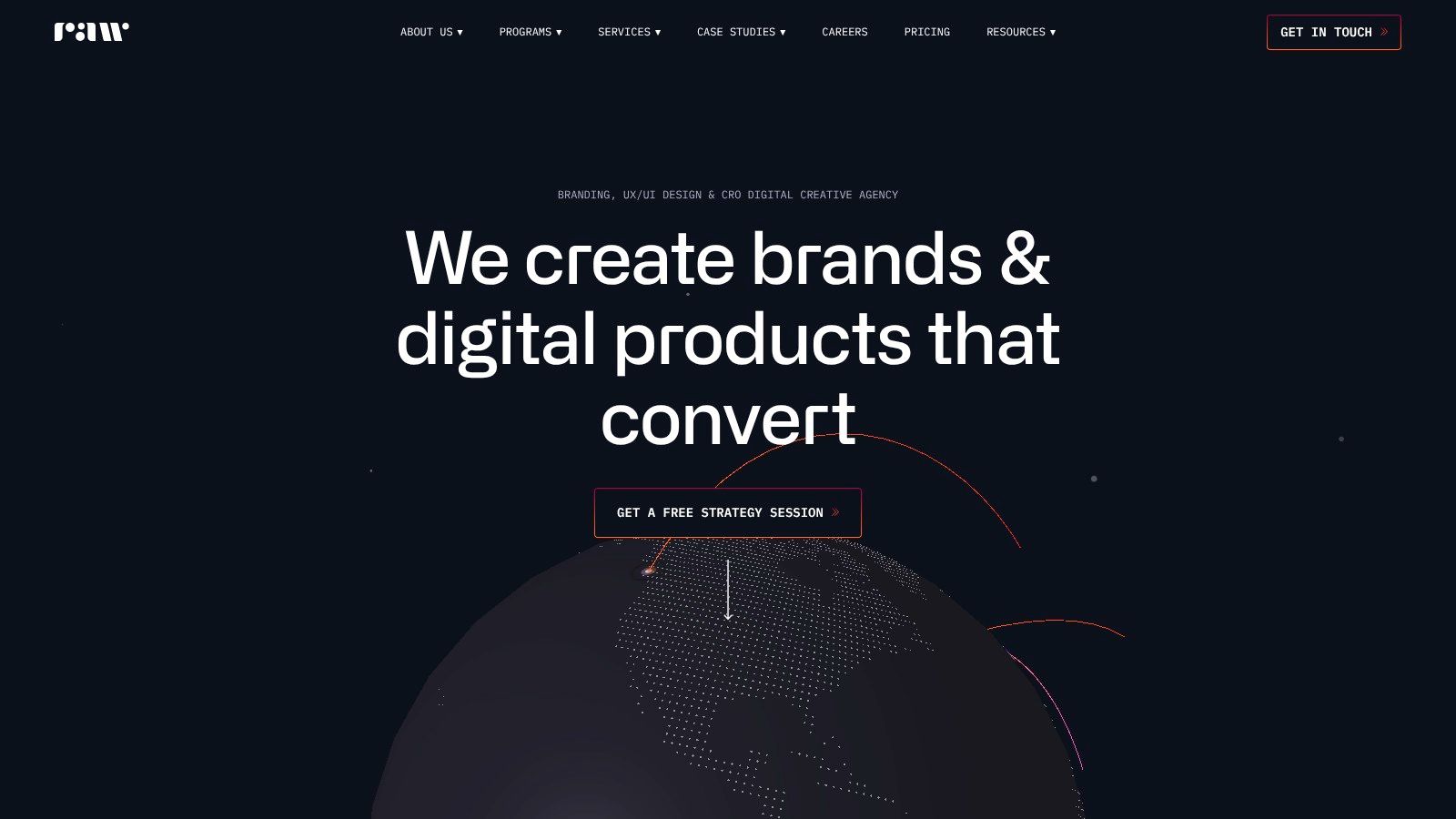
5. Raw.Studio for UX and CRO experimentation
Raw.Studio is suited to founders and marketing teams that know their website has conversion problems but don't want to guess at the solution. Its work combines UX research, design workshops, audits, conversion rate optimisation and growth experiments.
That makes it a strong option when usability, product-market fit or unclear customer journeys are the main blockers. Rather than jumping directly into a full redesign, Raw.Studio can start with an audit and prioritised recommendations. The commercial benefit is focus. You can identify the parts of the journey most likely to affect enquiries or sign-ups before committing to a broader build.
Choose experimentation when the problem is uncertainty
Raw.Studio is particularly relevant when different audiences behave differently, when a service page gets attention but fails to generate action, or when internal opinions dominate decision-making. Workshops and testing can turn those assumptions into a prioritised improvement plan.
The trade-off is scope. A UX and CRO specialist may not be the best partner for a very large enterprise CMS implementation, complex multi-site governance or a major technical platform rebuild. Engagements begin with audits and strategy rather than off-the-shelf packages, and pricing isn't publicly listed.
For a lead-generation business, confirm whether the work includes copy, analytics configuration, CRM handoff and follow-up workflows. Better interface decisions won't fix a slow response process on their own.
Best fit: a service or product business that needs research-led UX improvement and a disciplined test-and-learn process.
Main limitation: large technical builds or end-to-end search and automation may require another specialist.
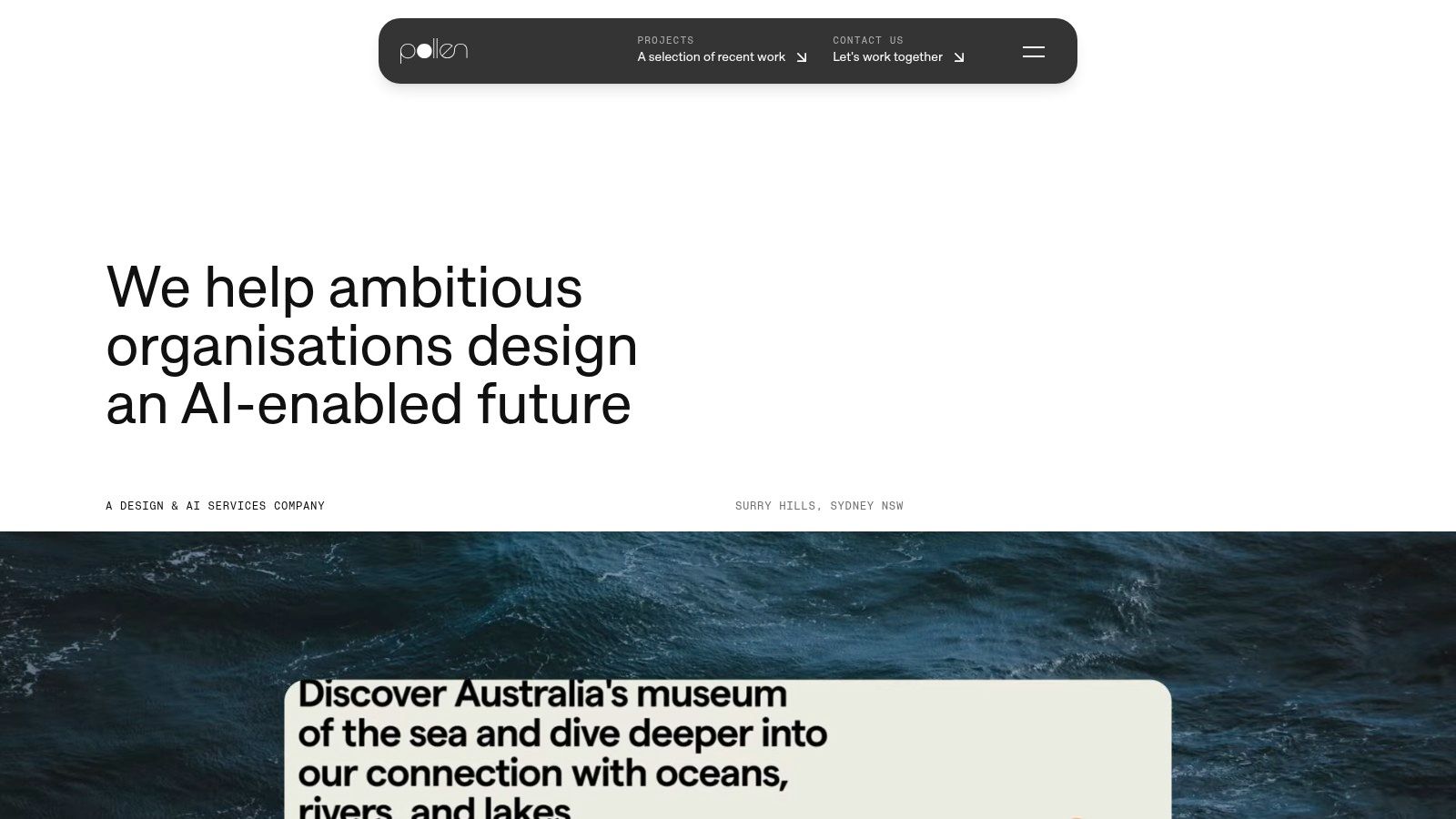
6. Pollen for research-heavy digital experiences
Pollen is the right type of partner when the website is part of a complex digital product, service ecosystem or AI-enabled experience. Its capabilities include strategy, UX research, product and service design, website experience design and support for startups and established teams.
Pollen's strength is the front end of difficult problems. If users have different needs, the journey involves several stakeholders, or the business is designing an AI-enabled interface, research can prevent the team from committing too early to the wrong structure. That's valuable for digital products where the website must explain, guide and support behaviour rather than generate a contact form submission.
Match research depth to business risk
A research-led engagement can clarify user needs, service logic and interaction patterns before development starts. It can also help teams decide where automation belongs in the experience and where human support remains necessary.
The downside is that this approach can feel slow or oversized for a small professional services firm that needs a sharper homepage, better service pages and automated booking. Pollen may also be less suitable for a quick template build or a narrow website refresh. Pricing isn't publicly listed, so ask for clear outputs at each stage and a direct link between research findings and commercial decisions.
Raffine's guide to website design prices can help buyers frame the conversation around scope, complexity and business requirements rather than treating every website as the same type of project.
Best fit: a team creating a research-heavy digital product, complex service journey or AI-enabled experience.
Main limitation: the strategic depth may exceed what a straightforward lead-generation website requires.
7. Luminary for enterprise governance and multi-site environments
Luminary is a national digital agency with a Sydney office, built for organisations that need enterprise-grade websites, mature governance and ongoing support. Its services cover strategy, UX, content, development, quality assurance and support, with experience across enterprise CMS platforms such as Optimizely and Kentico.
This is a sensible option for government, major corporate, retail and large multi-site organisations. These environments often need formal approvals, compliance controls, content governance, multiple user roles and consistent publishing standards. A boutique lead-generation studio may be faster, but it may not have the governance model required for a large digital estate.
Luminary's published work includes organisations such as MCC, MCG and Clipsal by Schneider Electric. Those examples point to the type of stakeholder complexity the agency is equipped to manage, rather than offering a direct prediction of outcomes for your business.
Enterprise capability comes with enterprise implications
Luminary's pricing isn't published, and larger engagements typically involve more planning, stakeholder management and formal assurance. Ask how the proposal handles content ownership, accessibility, security, analytics, CMS training, release management and post-launch support.
For a smaller law firm or buyers agency, that level of structure can be unnecessary. For a multi-site organisation with compliance-heavy requirements, it can reduce delivery risk and create clearer accountability.
Best fit: an enterprise, government or multi-site organisation requiring governance, mature QA and long-term platform support.
Main limitation: longer planning cycles and a scope model that is unlikely to suit a simple service-business funnel.
Top 7 Sydney Web Design Agencies Comparison
Agency | Implementation (🔄) | Resources (⚡) | Outcomes (⭐📊) | Ideal Use Cases (💡) | Key Advantages | Typical Trade-offs |
|---|---|---|---|---|---|---|
Raffine Studio | Medium, funnel + CRM + SEO integrations, conversion architecture 🔄 | Moderate, specialist team, ongoing content & automation ⚡ | High, predictable discovery calls, measurable pipeline & KPIs ⭐📊 | 💡 Australian SMEs / B2B service firms needing repeatable inbound lead gen | System approach (site+SEO+automation), AI/GEO SEO, fast shipping | Custom‑scoped pricing; not ideal for large transactional e‑commerce |
Devotion | High, enterprise CMS and complex integrations, end‑to‑end delivery 🔄 | High, technical teams, enterprise budget & longer timelines ⚡ | High, scalable platforms with measurable revenue/CPA improvements ⭐📊 | 💡 Complex builds, enterprise CMS, integration‑heavy projects | Deep technical expertise; de‑risked delivery framework | Higher budgets and longer timelines |
G Squared | Medium, research‑driven design tightly coupled to media/performance 🔄 | Moderate, creative + media + analytics teams ⚡ | High, conversion and acquisition alignment, measurable lift ⭐📊 | 💡 Clients wanting web + performance under one roof | Human‑centred design tied to paid media and measurement | May prioritise campaign/scale work; no packaged pricing |
4mation | Medium‑High, custom engineering across multiple tech stacks, mobile‑first 🔄 | Moderate‑High, local in‑house developers, strong engineering rigour ⚡ | Reliable, high‑performing, maintainable sites with post‑launch support ⭐📊 | 💡 Custom, technical sites needing local development and iteration | Proven track record, transparent engagement models | Engineering focus may need external brand/content partners |
Raw.Studio | Low‑Medium, UX research, audits and rapid growth experiments 🔄 | Low‑Moderate, UX/CRO specialists, quick test cycles ⚡ | Targeted, measurable UX/CRO lifts and prioritised impact ⭐📊 | 💡 Founders/marketing teams needing fast test‑and‑learn CRO | Strong CRO/UX emphasis; audit‑led proposals | Not suited for large enterprise CMS builds; starts with strategy |
Pollen | High, research‑heavy product & AI‑enabled UX design, complex journeys 🔄 | High, strategy, research and product design resources ⚡ | Strong, data‑informed UX and AI‑integrated experiences ⭐📊 | 💡 Complex user journeys, AI/automation in UX, research‑led projects | Deep discovery, AI UX credibility, product design strength | Engagements can be lengthy and research‑centric; not for quick builds |
Luminary | Very High, enterprise‑grade, multi‑site governance and compliance 🔄 | Very High, large teams, governance, long‑term support ⚡ | Enterprise, scalable, compliant ecosystems with mature ops ⭐📊 | 💡 Government, enterprise multi‑site and compliance‑heavy environments | Mature delivery/governance; enterprise CMS expertise | Larger budgets and longer lead times |
Choose the partner that fits your growth system
Start with the business outcome, not the moodboard. If your priority is more qualified discovery calls, the agency must be able to improve positioning, attract relevant search traffic, build a clear enquiry path, connect booking and CRM systems, and report on what happens after the form submission.
The Australian market is also shifting beyond traditional search. AI Overviews appear on 37.8% of analysed Australian search engine results pages, according to Australian AI search reporting. If a website relies only on ranking position and ignores how answers are structured and cited, it may lose visibility before a prospect reaches the site. Another Australian analysis reports that organic click-through can fall by around 60% when an AI Overview appears, making AI search visibility a practical consideration for service businesses, not a branding extra. See AI search click-through analysis in Australia for that finding.
Use this buying framework before requesting proposals:
Define the primary outcome: decide whether you need qualified calls, ecommerce transactions, platform capability, improved usability or a research-led product experience.
Identify technical complexity: document integrations, CMS requirements, user roles, portals, multi-site needs, compliance obligations and automation.
Confirm messaging ownership: ask who will clarify positioning, write service pages, produce content and protect consistency across the website and social channels.
Map the conversion path: require a clear route from first visit to enquiry, booking, CRM handoff, follow-up and sales reporting.
Check response operations: Australian lead-response benchmarks define a good response as under 5 minutes and best-in-class as under 60 seconds. The cited research reports that contact odds can drop 100x between 5 and 30 minutes, as detailed in Australian lead-response benchmarks. Your agency should explain how forms, calendars, notifications and follow-up support that standard.
Request a scoped proposal: compare deliverables, assumptions, client responsibilities, revision limits, launch support, analytics ownership and ongoing optimisation. Don't compare headline package names.
For service businesses needing website design, SEO, AI search visibility, funnels and automated discovery-call follow-up, Raffine Studio is the clear fit. Choose Devotion or Luminary for complex enterprise platforms and governance. Choose 4mation for engineering-led custom delivery, G Squared for web, creative and performance integration, Raw.Studio for UX and CRO experimentation, and Pollen for research-heavy digital experiences and AI-enabled product work.
Review whether your current website attracts qualified traffic, converts that attention into enquiries and follows up promptly. If those parts aren't connected, book a discovery conversation with Raffine to identify where the system is losing commercial opportunities.
Raffine Studio builds conversion-focused websites, funnels, SEO and AI search systems for buyers agencies, brokers and professional services firms. Visit Raffine Studio to review how your website can turn qualified traffic into booked discovery calls with automated CRM follow-up.